

Article 1 of the African Energy History Series
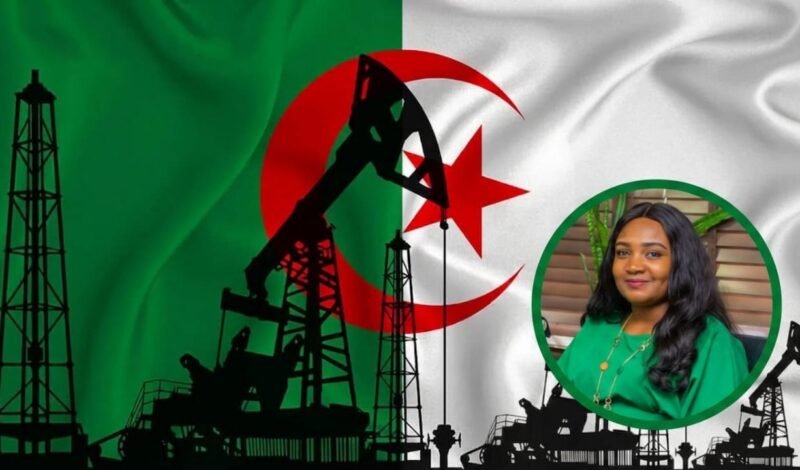
Algeria is the largest country in Africa by land area, stretching from the Mediterranean coastline in the north deep into the Sahara Desert. About 90% of the population lives in the narrow northern coastal strip, which makes up only about 12% of the country’s total land area. This geography shaped everything about how the country’s infrastructure was built.
Algeria is also one of Africa’s largest energy producers, sitting atop significant reserves of natural gas and oil. Understanding Algeria’s energy history is inseparable from understanding those resources, how they were found, who controlled them, and how the state eventually turned them into a tool for national development, including powering the country itself.
Pre-Independence: Colonial Infrastructure (Before 1962)
- Electricity infrastructure in the colonial period was built around the three principal urban centres: Algiers, Annaba (then called Bone), and Oran. Access was primarily for the settler population and commercial or industrial use.
- Notably, before independence in 1962, almost half of Algeria’s electricity came from hydroelectric sources, drawing on rivers in the Atlas mountains and the Kabylie region. This would change fundamentally after independence.
- Electricity production grew significantly under French rule: official figures cited at the time recorded output rising from 271 million kWh in 1938 to 814 million kWh in 1954, as colonial infrastructure investment expanded.
- Two private companies, Lebon et Cie and the Societe Algerienne d’Electricite, operated Algeria’s distribution network under French concessions. When France nationalized its domestic electricity industry in 1946, that nationalization was extended to Algeria, creating the Electricite et Gaz d’Algerie (EGA) by decree on 5 June 1947, bringing the private operators under a public monopoly.
- Algeria’s war of independence ran from 1954 to 1962. By the time France withdrew, much of the country’s infrastructure was damaged or abandoned. The electricity sector the new Algerian government inherited was both underdeveloped and in disrepair.
Founding Institutions and Early Policy (1962-1978)
- Algeria gained independence on 5 July 1962, under the National Liberation Front (FLN), which governed as a single-party state and adopted an explicitly state-led, socialist economic model. This directly determined the energy sector’s structure: state ownership, not private or mixed models, was the default from the start.
- The colonial-era utility, EGA, continued operating initially. By the time the new government reorganised it, EGA was already serving approximately 700,000 customers.
- On 28 July 1969, by presidential ordinance, EGA was dissolved and replaced by Sonelgaz, the Societe Nationale de l’Electricite et du Gaz (National Company for Electricity and Gas). Sonelgaz was granted a statutory monopoly over electricity production, distribution, importation, and exportation, and over the distribution and sale of natural gas within the country.
- Sonelgaz was created as part of a broader wave of nationalisations in the late 1960s, the same period that produced Sonatrach, the national oil and gas company, founded in 1963. The state intended to control all strategic resources and infrastructure directly.
- By 1974, Sonelgaz controlled approximately 81% of Algeria’s installed electricity capacity, which stood at 1,011 MW, and generated roughly 90% of national electricity output.
- A fundamental shift in the generation mix began after independence: plants that had relied on coal or hydropower progressively converted to natural gas, drawn from the domestic Hassi R’Mel field. By the early 1990s, hydro had fallen to just 7% of generating capacity. Algeria had essentially rebuilt its electricity system on top of its gas reserves.
- From 1978, Sonelgaz launched a formal total national electrification programme, funded substantially by oil export revenues that surged after the 1973 OPEC oil price shock. In 1977, the national electrification rate stood at approximately 57%, meaning roughly four in ten Algerians still lacked electricity access at the start of the programme.
- Algeria’s Five Year development plans, beginning in 1970, explicitly allocated investment to electricity infrastructure as part of state-led industrialisation. Sonelgaz’s expansion was embedded within these national planning frameworks, not driven by market signals.
Consolidation and the Crisis Decade (1980-2002)
- In 1982, the government established the Commissariat aux Energies Nouvelles (Commissariat for New Energy) to explore nuclear energy, solar power, and other alternatives. Nuclear ambitions stalled due to international concerns about potential military applications, but the solar research planted an institutional interest that would be revived decades later.
- The mid-1980s brought severe fiscal pressure but despite fiscal strain, Sonelgaz continued its rural electrification rollout. The national low- and medium-tension network reached approximately 102,000 km by 1987. Overall energy consumption quadrupled between the early 1970s and early 1990s, driven by population growth, electrification expansion, and industrial demand, exactly the period when revenues were declining.
- The 1990s brought political crisis alongside economic hardship. A military coup in January 1992 triggered a brutal civil conflict that lasted through most of the decade. The impact on specific electricity infrastructure during this period is not well documented in available public sources.
- By the late 1990s, with the worst of the conflict subsiding, the government began preparing sector reform, which led to the landmark legislation of 2002.
Reform and Liberalisation (2002-2015)
- Law No. 02-01, passed on 5 February 2002, was the central reform act for Algeria’s electricity sector. It formally ended Sonelgaz’s statutory monopoly over electricity production, opened generation to Independent Power Producers (IPPs) under a licensing regime, established third-party access to the grid, and created the Commission de Regulation de l’Electricite et du Gaz (CREG), the independent energy regulator, which became operational in January 2005.
- In practice, the 2002 reform achieved almost nothing in liberalisation terms. No private investor came to build generation capacity under the IPP framework. Sonelgaz restructured as a multi-subsidiary holding company but retained effective dominance over the entire sector. The legal architecture existed, but the market conditions to make it work did not. When a state utility can finance expansion through a government earning oil rent, there is no structural pressure on either party to open the market.
- A Renewable Energy Law was passed in 2004, providing the first legislative basis for incentivising solar, wind, and hydro investment. Practical implementation lagged significantly behind the law.
- By 2010, Algeria’s national electrification rate had reached approximately 99.3% of the population. This is a significant achievement for a country of Algeria’s size and geographic diversity, driven almost entirely by state-led grid extension financed by hydrocarbon revenues. Both urban and rural populations benefited: by 2019-2020, urban access stood at 99.6% and rural access at 97%.
- In 2011, the government announced its first formal national renewable energy target: 22 GW of installed renewable capacity by 2030, with an intermediate target of 4.5 GW by 2020. Critically, the government framed this push explicitly as a strategy to preserve natural gas for export rather than burning it domestically, reflecting the economic logic rather than a primarily climate-driven motivation.
- Renewable Energy Law No. 16-09 was passed in 2016, providing incentives including feed-in tariffs and a concession system for solar, wind, hydro, and biomass investment.
- Despite this legislative activity across 2002 to 2015, actual renewable deployment remained negligible. The gap between target and delivery became the defining characteristic of Algeria’s energy transition in this period.
Recent Transition and Current State (2015-2026)
- As of 2023, Algeria’s electricity generation totalled approximately 97.2 TWh, of which natural gas supplied 98% and all other sources, including hydro and nascent solar, combined for the remaining 2%. This is one of the most gas-dependent electricity systems of any country in the world.
- Electricity access is now effectively universal: Algeria recorded 100% electrification in 2023 per World Bank tracking data, with the Africa Energy Portal citing 99.7% for the same year. The minor discrepancy reflects methodological differences between sources rather than a material gap in access.
- Against its 2011 target of 4.5 GW of renewable capacity by 2020, Algeria had installed approximately 446 MW by end-2025, roughly one-tenth of that target. The 22 GW by 2030 goal has since been revised down to 15 GW by 2035. The gap between policy ambition and delivered capacity is explained by artificially low domestic gas prices (which remove the economic incentive to switch), foreign ownership restrictions, and sustained contracting and bureaucratic delays.
- In 2021, the government created SHAEMS (Société Algérienne des Énergies Renouvelables), a dedicated state-owned renewable energy company, to lead solar project development and attract foreign partners. That same year, Algeria launched the 1,000 MW Solar Initiative, covering projects across 11 provinces, predominantly in the south, with a total cost of 171.5 billion Algerian Dinars. A further 2 GW tender was initiated in February 2023.
- A broader 3.2 GW solar programme is now underway across 22 planned plants. As of April 2026, these projects were reported at 40% completion, and two plants totalling 400 MW were commissioned in April 2026. More than 1.4 GW is scheduled for commissioning during 2026, suggesting the pace of delivery is accelerating, though Algeria’s track record of timeline delays warrants caution in treating these as guaranteed outcomes.
- Algeria’s solar potential is among the highest in the world: southern regions record annual solar irradiance of 2,263 kWh per square metre, and the Sahara offers vast available land. The technical case for large-scale solar is compelling; the barriers have been structural and financial, not technical.
- Algeria has also announced a National Hydrogen Development Strategy (2023) targeting 40 TWh of green hydrogen production per year by 2040, though this is at a very early planning stage.
- The fundamental strategic tension shaping current policy is this: Algeria has built its entire electricity system on domestic natural gas but burning that gas domestically reduces what can be exported for foreign exchange. According to public sources, enewables, in the government’s own framing, are primarily a tool to preserve export capacity, not a climate strategy. Whether that economic logic is enough to drive the structural reforms needed, including subsidy reform and genuine market opening, remains to be seen.
Source/References
- S. Library of Congress, Algeria Country Study, “Electric Power,” countrystudies.us
- S. Naval Institute Proceedings, “Algeria: A Case Study in the Evolution of a Colonial Problem,” July 1957
- Sonelgaz official history, sonelgaz.dz/en/category/history
- EIA (U.S. Energy Information Administration), “Algeria,” updated June 2025, eia.gov
- Enerdata, “Algeria Energy Information,” enerdata.net, and “Algeria commissions two solar PV plants totalling 400 MW,” April 2026
- IEA, “Algeria Solar Initiative” and “Algeria — Countries & Regions,” iea.org
- IEA, “The Future of Electricity in the Middle East and North Africa,” 2024
- Energypedia, “Algeria Energy Situation,” energypedia.info
- Africa Energy Portal, “Algeria,” africa-energy-portal.org
- Climate Analytics, “Algeria Power Sector,” 1p5ndc-pathways.climateanalytics.org
- Wiley / Regulation & Governance, “Policy coherence versus regulatory governance: Electricity reforms in Algeria and Morocco,” 2022
- ScienceDirect, “Electricity load dynamics, temperature and seasonality Nexus in Algeria,” 2020
- Jones Day, “Newly Updated Renewable Energy Program in Algeria,” April 2015
- S. Commercial Service / trade.gov, “Algeria — Renewable Energy” and “Algeria’s Energy Transition Plan,” 2021
- ESI-Africa / Dii MENA Energy Outlook 2026, “Algeria to commission 1.48 GW of solar capacity by August,” February 2026
- World Bank, electrification rate data; Wikipedia, “List of countries by electrification rate” (Algeria: 100%, 2023)
- GE Vernova, Sonelgaz overview; Mordor Intelligence, “Algeria Renewable Energy Market,” 2025
This article is part of independent historical research and writing series examining the development of electricity and power systems across African countries. It is compiled for educational purposes, to help readers understand where these energy sectors began, how they evolved, and what lessons might be drawn for the future. The content draws on publicly available sources, including institutional records, academic literature, government documents, and news reporting. This article does not constitute professional, legal, financial, or investment advice. Readers are encouraged to verify figures independently and to consult primary sources and qualified professionals for any decision-making purposes.