

Background
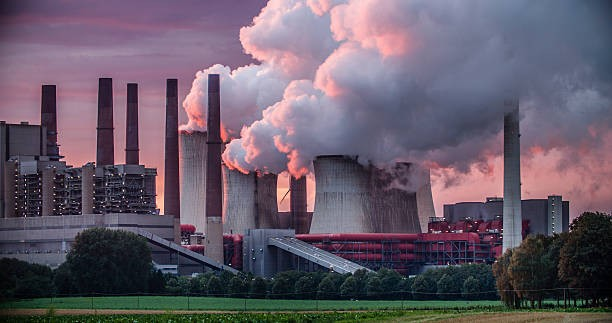
I recall my discussion with some colleagues on the hypocrisy of certain European countries returning to the use of coal — one of the dirtiest and most polluting forms of energy production.
If nothing else, the Russian–Ukraine war and the consequent rise in energy prices have brought to the fore the most paramount issue facing the global energy sector today: Energy Security. Threat to energy security is threat to the very life of any economy, and at this point, caution can be thrown to the wind as countries go to any length to ensure the availability of energy. This is evident as many countries that had previously declared unwavering support for the clean energy transition now revert to coal. For instance, Germany, Italy, Austria, and the Netherlands have all indicated that coal-fired plants could be used to compensate for the reduction in Russian gas supplies.
This is apparently hypocritical — but can I fault them? My answer is No. It is their way of responding to the challenge before them. In one instance, the German Economy Minister described the government’s decision to burn more coal as a “bitter” one but stated that the country must do everything possible to store as much gas as it can before winter. In his words:
“The gas storage tanks must be full in winter. That has top priority.”
Will this reversal to coal affect the clean energy transition and the need to protect our climate? Most definitely — we have undeniably moved a step backward in the journey to net zero. Nonetheless, the transition to clean energy is not an illusion or some unrealistic ambition. On the contrary, it is a reality that has come to stay despite the many obstacles. These challenges only underscore that energy security and what I term energy independence must now be treated as urgent priorities. Many have argued that this current return to coal is the result of decades of failed energy and infrastructure policies by several countries.
From the foregoing, I’d like to share a few thoughts:
- The first and best approach to addressing the current energy crisis is increased deployment of renewable energy sources through robust legal, policy, financial, and technological frameworks.
- Countries that must revert to dirty fuels like coal to cushion the hardship caused by the energy crisis must treat this as a temporary measure — a stopgap while channeling resources toward clean energy deployment.
- Those compelled to fire coal plants at this time must do so sustainably by adopting appropriate technologies such as carbon capture and storage (CCS) and other carbon offsets to mitigate climate impacts.
- The more renewable energy sources are deployed, the more energy independent individuals, businesses, and countries can become. Renewable energy is free, cannot be monopolised, and is always available.
- There will never be a time when fossil fuels are completely phased out. The goal is to generate and use them responsibly and sustainably, with full consciousness of their environmental impact.
Finally, advocacy around climate change and energy transition must pay close and deliberate attention to energy security. There can be no transition at the expense of economic growth and citizens’ welfare. There is no one-size-fits-all approach, and we may not all arrive at the destination simultaneously. Every country must design its own energy transition plan to ensure energy security alongside its economic and environmental goals.